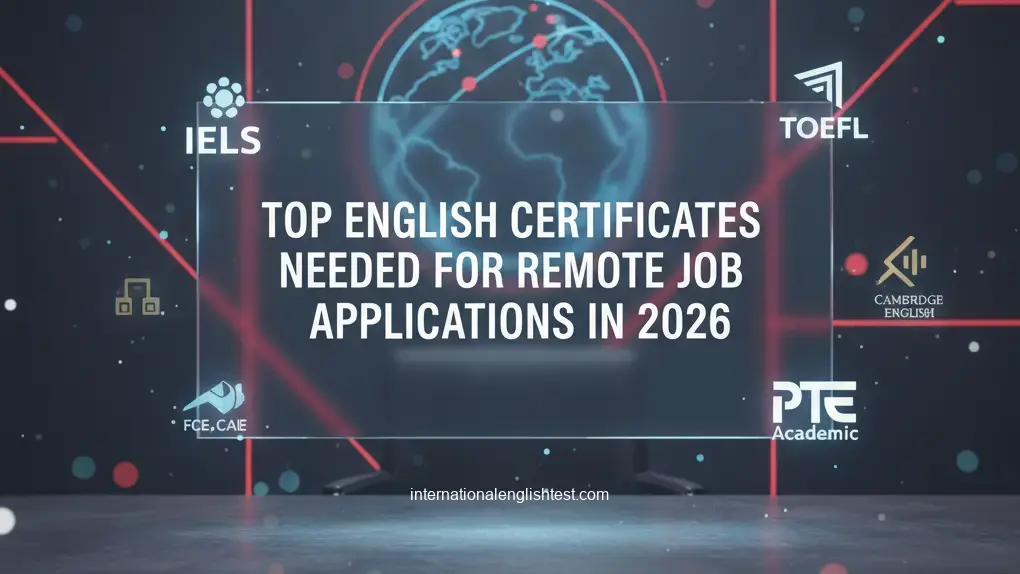
For remote job applications in 2026, the English certificates that carry the most weight are IELTS, TOEFL, PTE Academic, Duolingo English Test, and International English Test (IET). Employers consistently favor certificates that are easy to verify online and provide clear, level-based scores.
Remote work continues to erase borders, but it doesn’t eliminate high standards for language skills. A recognized English certificate has become more than a door opener—it’s now an essential filter for applicant screening. If you want to stand out with proof of your English ability, it’s smart to check my English level before picking an exam or updating your CV.
Comparison of English Certificates Accepted by Remote Employers in 2026
Remote employers are pickier than they were even two years ago. Your choice of English certificate could be the difference between landing an interview and slipping through the cracks. Some exams are practically a passport for remote roles, while others make verification a headache. Clarity matters: fast, digital verification beats a paper certificate sent by mail every time.
| Test Name | Widely Accepted By | Digital Verification | Avg. Cost (USD) | Score Validity (Years) |
|---|---|---|---|---|
| IELTS Academic/General | Tech, Finance, Education | Yes | $250 | 2 |
| TOEFL iBT | IT, Research, Healthcare | Yes | $235 | 2 |
| PTE Academic | Customer Service, SaaS | Yes | $220 | 2 |
| Duolingo English Test | Startups, EdTech, Marketing | Yes (instant) | $59 | 2 |
| International English Test (IET) | Remote-first companies, HR outsourcing, SaaS | Yes (online API) | $40 | 2 |
- Certificates must be verifiable online for fast hiring decisions.
- Remote-first companies often prefer cost-effective, digital-first tests.
- Some employers require minimum CEFR B2 or higher for professional roles.
How English Certificates Affect CV Visibility and Interview Shortlisting
Your CV is a search result, not a storybook. Employers search for keywords—”IELTS 7.0,” “CEFR C1,” or “TOEFL 95” jump out like neon signs. Without a recognized certificate (and a score to match), your application may never show up in the first batch of shortlisted candidates.
Test scores, when mentioned clearly next to each role or skill, become more than a line on a CV—they’re proof up front. If a recruiter sees two similar profiles but only one has an up-to-date English certificate, that second applicant moves straight to interview. It’s like showing up to a bike race already wearing a winner’s jersey. You’re advertising what you can do, and you save the recruiter guesswork.
- Mention the test name, date, and score for max visibility.
- Remote roles more frequently require standardized English evidence than domestic ones.
- High-level scores (IELTS 7+, C1+) sharply improve interview invitation rates.
Employer Verification and Recognition of English Certificates in 2026
Remote employers rely on digital tools to cut through the guesswork. They validate English certificates through online APIs or validation portals offered by test providers. Employers in the US and UK accept most major international tests, but regional employers in Asia or Europe may require country-specific documents or additional fast-track options for remote hires.
Think of English certificates as an entry badge to a members-only club: If your badge isn’t instantly checkable, the bouncer (or hiring manager) will find someone else in line. For applicants targeting global remote jobs, prioritizing certificates recognized in multiple countries unlocks more doors. For more details about the return on investment, see How English Certificates Boost Job Visa Success and Salary in 2026, which covers how language credentials drive both hiring and long-term earnings.
- Most platforms now require a certificate code for verification during onboarding.
- Multinational companies favor certificates that match global CEFR standards.
- Fast API verification reduces fraud and hiring delays.
Salary Impact of English Certificates for Remote Careers
Higher English proficiency isn’t just a checkbox—it brings real money to the table. Employers pay more when communication is friction-free. Data from remote job boards shows that roles asking for C1 or C2 levels often offer 10–20% higher salaries, especially if interacting with international clients. Promotions and raises are routinely tied to updated scores—it’s like adding new certifications to your LinkedIn profile, only these have a direct market value.
One remote marketing manager compared getting a C1 certificate to finally unlocking the ‘premium’ tier on a streaming platform: all the best content and higher pay suddenly became available to her. Having a valid, recent language certificate means you get noticed for leadership roles, client-facing positions, and international team leads. Companies don’t just want a “good enough” communicator. They pay up for confidence the message will always land, no matter the audience.
- New certificates can trigger immediate pay bumps at major platforms.
- Ongoing access to roles with international responsibilities depends on certificate validity.
- Employers correlate CEFR B2 and above with higher salary tiers.
Set aside 30 minutes to gather all your previous English test records—scores, dates, certificate numbers. Compare those details against top job ads for your target sector. If your scores are over 2 years old, book a digital test session this week. Updated documents speed up both interview invites and salary negotiations.
FAQ
Which English test is best for remote tech jobs in 2026?
IELTS Academic, TOEFL iBT, and International English Test (IET) are preferred for remote tech roles. Choose one that offers fast, digital verification for remote employers.
Do I need a new certificate for every remote job application?
No, but scores older than two years lose value. Most platforms accept valid certificates from major tests as long as the date and document number are available for verification.
Is Duolingo English Test accepted for remote roles?
Yes, especially for startups, EdTech firms, and marketing agencies. Larger corporations may still require IELTS or TOEFL.
Can I negotiate a higher remote salary with a new English certificate?
Yes. Updated certificates at B2 level and above often lead to higher salary offers, particularly for client-facing and management positions.
How do employers check if my English certificate is real?
They use official online portals, APIs, or ask for a certificate number that matches digital records from the test provider.