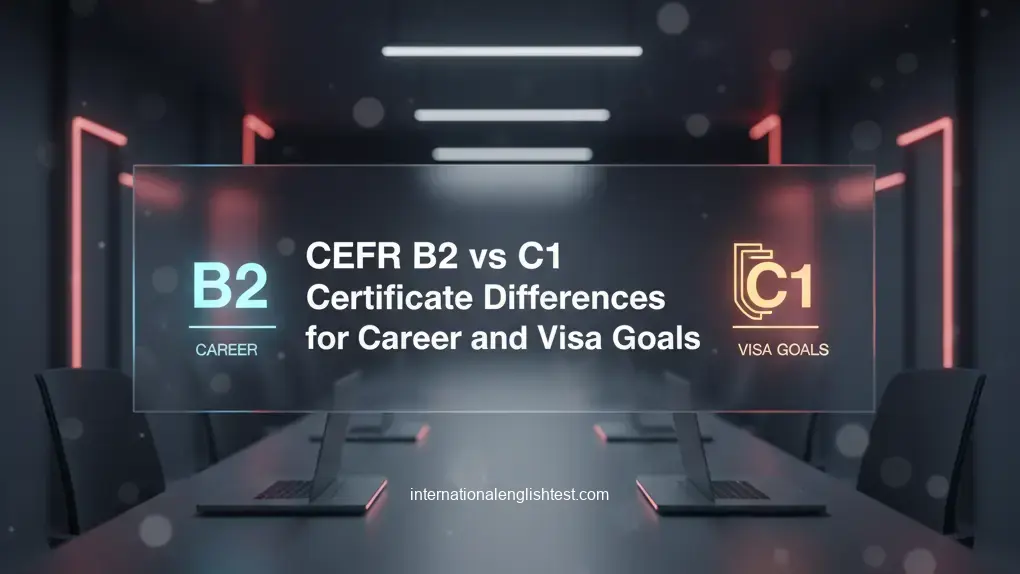
Choosing between a CEFR B2 and a C1 certificate for your job or visa plans? C1 offers stronger recognition in skilled professions and migration, while B2 covers basic entry to many jobs and some visas. If you aim for high-skilled roles or streamlined immigration, C1 is almost always the safer bet.
For anyone feeling unsure about their standing, the fastest way to eliminate guesswork is to check my English level online in minutes.
B2 vs C1 CEFR Certificate Recognition: Employer and Government Comparison Table
In hiring and government checks, specific English levels unlock different doors. B2 often works for basic customer service or frontline roles. C1 tends to be a minimum for management, academic, and regulated jobs. Regulations and visa offices rarely compromise on this. The stakes only get higher in law, healthcare, and finance. Here’s a direct comparison of what’s expected by sector:
| Sector/Authority | B2 Accepted? | C1 Required? |
|---|---|---|
| Hospitality & Retail | Yes (Entry-level) | Preferred for supervisors |
| Banking/Finance | Rarely | Often Mandatory |
| Healthcare | Not sufficient | Required |
| Government Jobs | No | Standard |
| Work Visas (Skilled) | Rarely | Yes |
- B2 is fine for basic jobs and lower-level visas.
- C1 is the key for skilled, regulated, or government-backed opportunities.
- Visa officers rarely negotiate down from C1 requirements.
How CEFR B2 and C1 Levels Impact Job Eligibility and Career Progression
Certain industries treat English like a ticket: it either gets you through the door, or it doesn’t. In IT support or hotel work, B2 unlocks most positions. For consulting, education, and management, employers expect C1 as a baseline. That’s not just a hoop to jump—it actually guides who moves up, who gets sidelined, and who’s trusted with client meetings.
Think of B2 as the driver’s license for local streets, while C1 is what you need for the autobahn—speed, safety, and no room for mistakes. Data from recruiters shows a stubborn pattern: Those with C1 land more promotions and bigger assignments. The difference in median salary can reach 15–20% in fields like banking and law. English proficiency sets the pace for how quickly you move up.
For more details on certificate lifespan and which qualifications are accepted for future applications, review the official guidance on CEFR Certificate Validity & Recognition for 2026 University Entry.
- B2: Entry into customer service, junior admin, logistics, basic IT roles
- C1: Required for teaching, consulting, government jobs, leadership
- C1 holders report faster salary growth and better internal mobility
Work Permit and Migration: Which CEFR Level Meets Official Language Criteria?
Governments set language bars that don’t budge. For many skilled worker visas, B2 is no longer enough—even if it was five years ago. C1 certifies you’re ready for complex paperwork, legal terms, and handling official interviews. The difference is like being able to order lunch vs. debating a contract clause on the spot. Use your certificate with intent: keep it updated, and bring a readable, verifiable copy to all interviews. Many migration offices now require digital verification, so make sure your certificate is registered and can be checked online.
- Always check the minimum level for each visa stream; requirements change yearly.
- Present your certificate with transcripts if possible, not just the card or printout.
- Practice for application interviews using test banks at your current level.
If you’re deciding which CEFR level to pursue, review active job ads and current visa bulletins today—note the exact English level listed. That’s your target, not just general advice. Adjust your study plan now, aiming for mock tests that simulate the stakes of a real interview or visa submission. This focus accelerates progress and reduces surprises when applications are reviewed.
FAQ
Is C1 always better than B2 for jobs?
In skilled or regulated fields, yes—C1 usually unlocks more roles and better pay. For basic roles, B2 is enough.
Can I get a work visa with only B2?
It depends on the country and job type, but most skilled or professional visas require C1 as the minimum.
Does a C1 certificate expire?
Some certificates last forever, but others (like IELTS or PTE Academic) are only valid for two years—always check with the authority reviewing your application.
Is it worth paying for a C1 test if I only want an entry-level job?
Not always. B2 is usually enough for entry-level roles. C1 is an investment if you want fast career growth or future visa security.
Can I use my CEFR certificate in more than one country?
Yes, most CEFR-based certificates have broad recognition, but always confirm with employers or immigration for each country.